
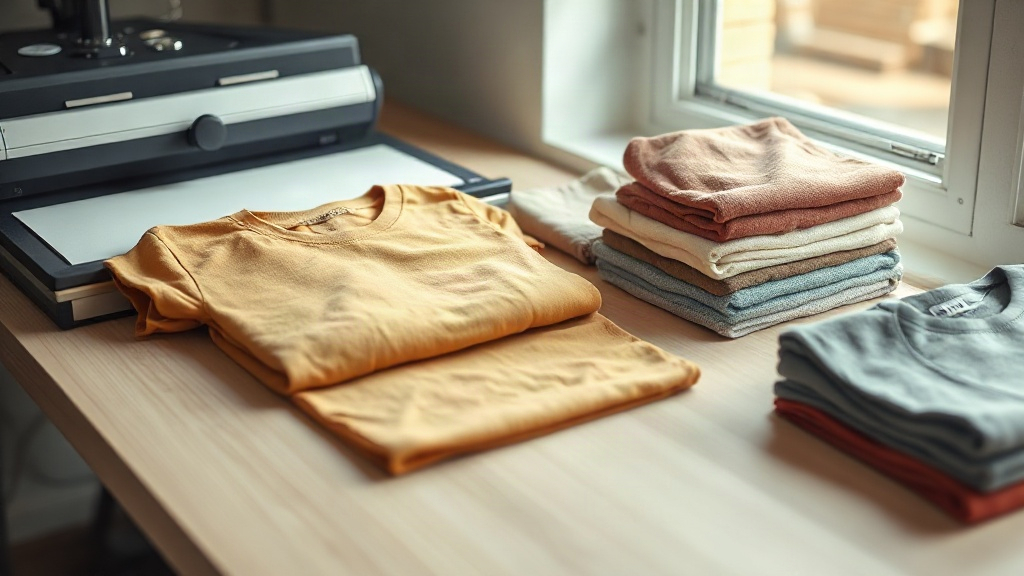
Walk into any print shop and you will hear the same complaint sooner or later: the blank tee failed the job before the ink ever touched it. Crooked seams, a hem that waves, a fabric blend that scorches under the heat press, or a fit that looked fine on the hanger and boxy on a real person. That is the quiet problem smart blanks are designed to solve. Not by being the cheapest option in the catalog, but by being the option that behaves predictably from the box to the press to the customer's hands.
If you run a small apparel brand, a school spirit shop, or a one-person print operation out of a garage, the blank you choose quietly decides how much of your day goes to reprints and refunds. This guide breaks down what actually makes a blank smart, how to test one before you commit to a case, and where DTF transfers and brands like Shaka Wear fit into the picture.
What "Smart Blanks" Actually Means
The phrase gets used loosely, so it helps to be specific. A smart blank is not a single fabric or a single brand. It is a blank that has been chosen with the entire production chain in mind: how it prints, how it washes, how it fits across a size run, and how it holds up when a customer wears it fifty times.
Four traits show up again and again in blanks that earn that label.
1. Consistent fabric weight and weave
A 5.3 oz cotton tee from one dye lot should feel like the 5.3 oz tee from the next lot. When a mill tightens its yarn and finishing tolerances, the difference shows up in the press room. Ink sits on the surface instead of sinking unevenly, and a heat press timer that worked yesterday still works today.
2. Predictable shrinkage
Every cotton garment shrinks. The smart ones shrink in a way you can plan for. If a blank is pre-shrunk or ring-spun with a tight knit, a medium stays close to a medium after the first wash. That matters enormously if you sell online and cannot afford to replace half your orders because a large turned into a medium.
3. A cut that flatters real bodies
Fit is not vanity. A retail-fit tee with a slightly tapered waist and a shoulder seam that sits where the shoulder actually is photographs better, sells faster, and gets worn more often. More wears means more impressions for whatever you printed on it.
4. A price that leaves room for the print
A blank that eats your entire margin is not smart no matter how nice the hand feel is. The goal is a blank that costs a little more than the bargain bin but saves you money through fewer defects, fewer reprints, and a higher perceived value at retail.
How Smart Blanks Differ From Standard Blanks
Pull a standard economy tee and a smart blank out of the box and lay them side by side. The differences are small but they compound.
- Stitch density: Smart blanks usually run a tighter stitch per inch count along the hem and shoulder. That is the first place a cheap tee comes apart.
- Side seams: Tubular construction stretches and twists. Side-seamed blanks hold their shape and give you a cleaner canvas for all-over prints.
- Shoulder-to-shoulder tape: A small strip of fabric across the back neckline. Cheap blanks skip it, and the neckline stretches into a wave after a few washes.
- Dye consistency: Batch-to-batch color matching matters when you reorder the same design six months later.
None of these features is dramatic on its own. Together, they are the difference between a blank that quietly does its job and one that shows up in your complaint inbox.
Pairing Smart Blanks With DTF Transfers
Direct-to-film printing has changed the economics of small-run apparel, and it has also changed which blanks make sense. A heat press does not care how pretty your artwork is if the fabric underneath fights it.
Here is what to keep in mind when you pair DTF transfers with a smart blank.
Match the transfer to the fiber
DTF films bond best to cotton and cotton-rich blends. A 100% cotton smart blank gives you the most predictable result. If you are printing on a 50/50 poly-cotton, expect a slightly different hand feel and dial your press temperature down a notch. Pure polyester needs a lower temperature and shorter dwell time or the film can scorch the fabric.
Pre-press matters more than people admit
Five to ten seconds of pre-pressing the blank removes moisture and wrinkles before the transfer goes down. Skipping that step is the single most common reason a DTF print peels at the edges after a few washes. It costs you seconds and saves you reprints.
Watch the pressure, not just the temperature
Most DTF failures come from uneven pressure, not the wrong temperature. A press with a worn platen or a warped upper plate will give you a print that looks fine cold and lifts after the first wash. If you are pressing a smart blank with a thicker weave, a medium-firm pressure with a consistent dwell usually beats cranking the heat.
Why Shaka Wear Fits the Smart Blank Conversation
Shaka Wear has built a following among streetwear and small-batch printers for a reason that is easy to overlook: consistency. Their heavyweight tees hold a print well because the fabric has enough body to support a full-front DTF transfer without the design sinking into the weave. The boxy, relaxed cut has become a look in its own right, which means a customer is more likely to wear the shirt as a statement piece instead of treating it as a giveaway.
That last point is worth dwelling on. The lifespan of a printed tee is the real return on your blank investment. A blank that gets worn twice a week for two years is doing more marketing than any ad you could buy. A blank that pills or twists gets shoved to the bottom of the drawer, and your design disappears with it.
A Practical Test Before You Commit to a Case
Order a single blank in your most common size before you buy a full run. Then run it through a simple gauntlet.
- Press a test DTF transfer using your normal settings and note how the film releases.
- Wash the shirt three times on a normal cycle and tumble dry on low.
- Check the neckline for stretching, the hem for twisting, and the print for cracking or lifting at the corners.
- Wear it for a full day and pay attention to how it feels at the shoulders and under the arms.
If the blank survives that, it is a candidate for a real order. If it fails, you learned that for the price of one shirt instead of fifty.
Common Mistakes When Choosing Blanks
Most blank-related problems trace back to a handful of habits.
- Buying on price alone. The cheapest blank usually costs more once you factor in defects and reprints.
- Ignoring the size run. A blank that fits well in medium but runs short in XXL will hurt your larger-size customers the most.
- Mixing dye lots. If you reorder, ask for the same lot number or expect a visible color shift.
- Skipping the wash test. A blank that looks great in the box can behave very differently after one cycle.
- Not matching the blank to the print method. A delicate DTF design on a rough heavyweight weave will look muddy; a bold all-over print needs a smoother surface.
Frequently Asked Questions
Are smart blanks worth the extra cost over economy tees?
For most small brands and print shops, yes. The extra dollar or two per blank is usually recovered through fewer reprints, fewer returns, and a product that customers actually wear. The math changes if you are printing one-time event shirts where longevity does not matter, but for anything meant to be worn repeatedly, the better blank pays for itself.
Can I use DTF transfers on any smart blank?
DTF works on most fabrics, but the results vary. Cotton and cotton-rich blends give the most predictable bond and softest hand feel. Polyester and heavy nylon need lower temperatures and shorter dwell times, and you should always run a test press before committing a full order.
How do I know if a Shaka Wear blank will shrink a lot?
Shaka Wear tees are generally cut with a relaxed fit and hold their size reasonably well after washing, especially if you wash cold and dry low. The safest approach is to order one test shirt, wash it three times, and measure it against the original before you buy a case for a big run.
What is the biggest mistake people make with smart blanks and DTF?
Skipping the pre-press. Moisture and wrinkles in the fabric are the leading cause of peeling and cracking DTF prints. Five to ten seconds of pre-pressing before the transfer goes down solves most of it, and it costs almost nothing in time.
Should I stock multiple blank brands or stick to one?
Sticking to one or two trusted blanks keeps your sizing, colors, and press settings consistent, which makes training and quality control much simpler. Add a second option only when you have a clear reason, such as a lighter summer weight or a specific fit your customers keep asking for.
The Bottom Line on Smart Blanks
The blank is not the background of your product. It is the product. Choosing a smart blank means choosing fewer surprises on press day, fewer complaints after wash day, and a shirt your customer reaches for without thinking. Pair that blank with the right DTF transfers, respect the press settings, and you have a process that scales from a single test shirt to a full production run without changing the rules halfway through.