
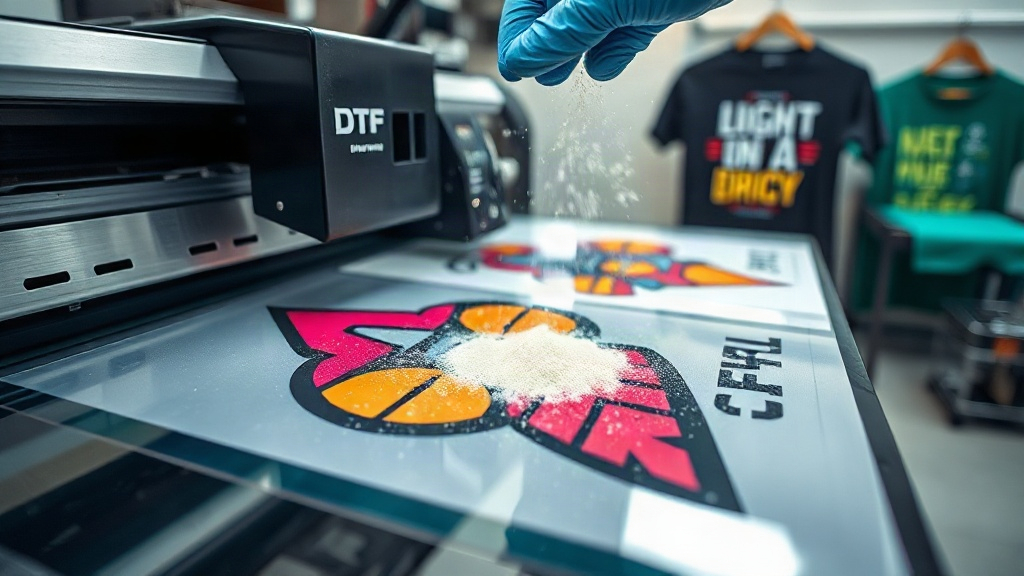
If you've been exploring custom apparel decoration, you've likely encountered DTF printing. Short for Direct-to-Film, this method has quickly gained popularity among crafters and professionals alike for its versatility and vibrant results. Unlike traditional techniques, DTF printing allows you to transfer detailed designs onto a wide range of fabrics with ease. In this guide, we'll walk you through the entire process, from understanding the basics to creating your first print.
What is DTF Printing?
DTF printing stands for Direct-to-Film. It's a digital printing method where your design is printed onto a special film, coated with adhesive powder, and then heat-pressed onto the fabric. This process eliminates the need for weeding or masking, making it faster and more efficient than some other methods. The result is a soft, stretchable print that adheres well to cotton, polyester, blends, and even tough-to-print materials like nylon and leather.
How Does DTF Printing Work?
The DTF printing process can be broken down into four main steps: printing, powdering, curing, and pressing. Let's explore each.
Step 1: Printing the Design
First, your design is printed onto a PET film using a specialized DTF printer with pigment-based inks. These printers typically use CMYK plus white ink to ensure opacity on dark fabrics. The white ink acts as a base, allowing colors to pop. The film is coated with a release layer that holds the ink until transfer.
Step 2: Applying Adhesive Powder
After printing, the wet ink is dusted with a thermoplastic powder, often TPU. This powder sticks to the ink and will become the adhesive that bonds the design to the fabric. Excess powder is shaken off, leaving a thin, even layer.
Step 3: Curing the Powder
The film then goes through a curing process, usually with a heat press or a conveyor oven, to melt the powder into a smooth, gel-like state. This step is crucial; undercuring can lead to poor adhesion, while overcuring can cause the powder to burn. Temperatures typically range from 160°C to 180°C (320°F to 356°F) for about 2-3 minutes.
Step 4: Heat Pressing onto Fabric
Finally, the cured film is placed on the garment and pressed with a heat press at around 150°C to 160°C (300°F to 320°F) for 10-15 seconds. After pressing, the film is peeled away (hot or cold peel depending on the film), leaving the design bonded to the fabric.
Why Choose DTF Printing?
There are several compelling reasons to consider DTF printing for your projects.
- Versatility: Works on almost any fabric, including cotton, polyester, blends, and even treated nylon and leather.
- No Weeding: Unlike vinyl, there's no tedious cutting and weeding of tiny details.
- Vibrant Colors: The white ink base allows for bright, opaque prints on dark garments.
- Durability: When applied correctly, DTF prints withstand repeated washing without cracking or fading.
- Cost-Effective for Short Runs: No minimum order quantities, making it ideal for small businesses and personalized items.
DTF vs. Other Printing Methods
How does DTF stack up against DTG (Direct-to-Garment) and screen printing? DTG is great for 100% cotton but struggles with poly blends and dark colors. Screen printing is cost-effective for large orders but requires setup and is limited in color gradients. DTF bridges the gap: it handles small batches, complex designs, and a wide range of fabrics with ease. Plus, the hand feel is soft and stretchable, similar to DTG.
Getting Started with DTF Printing
To start DTF printing, you'll need a few key pieces of equipment.
- DTF Printer: A dedicated printer that uses DTF inks, often with white ink circulation. Prices range from a few thousand to over ten thousand dollars.
- DTF Film: PET film rolls or sheets designed for DTF.
- Adhesive Powder: TPU powder, usually available in fine or medium grades.
- Curing Oven or Heat Press: For melting the powder.
- Heat Press: For transferring to garments.
- Design Software: Such as Photoshop or Illustrator to prepare artwork.
Once you have your setup, practice with small designs to dial in your settings. Each printer and film may require slight adjustments in temperature, pressure, and time.
Tips for Successful DTF Printing
- Pre-treat garments: Though not always necessary, pre-pressing the garment removes moisture and wrinkles for better adhesion.
- Use quality film: Cheaper films may cause ink bleeding or poor release.
- Control humidity: High humidity can affect powder application; aim for 40-60% relative humidity.
- Test wash: After printing, wash a sample to ensure durability before selling.
- Store film properly: Keep unused film sealed to prevent dust and moisture.
Common Applications of DTF Printing
DTF printing is used for a variety of items beyond t-shirts. You can decorate hoodies, tote bags, caps, denim jackets, and even shoes. It's also popular for team uniforms, promotional products, and personalized gifts. Because it works on both light and dark fabrics, it's a versatile choice for any project.
Frequently Asked Questions
How long does a DTF print last?
With proper application and care, a DTF print can last as long as the garment itself. Wash inside out in cold water and avoid ironing directly on the print to maximize longevity.
Can I use DTF on 100% polyester?
Yes, DTF works well on polyester. However, because polyester is heat-sensitive, use lower pressing temperatures (around 130°C) and shorter times to avoid scorching.
Do I need a special printer for DTF?
Yes, you need a printer that supports DTF inks and white ink. Converting an Epson printer is a common option, but dedicated DTF printers are also available.
Is DTF printing cost-effective for small businesses?
Absolutely. With no minimum orders and low setup costs compared to screen printing, DTF is ideal for small businesses, especially for custom or one-off items.
What is the difference between DTF and DTG?
DTG prints directly onto the garment, while DTF prints onto a film that is then transferred. DTF works on more fabric types and doesn't require pre-treatment, but DTG may have a softer feel on 100% cotton.